

What Instead of Figma?
The burdensome realities of a market dominated by closed formats and imposed solutions are slowly fading into irrelevance. While we will still have to wait several years for a full transformation, the direction of change is already clearly visible. When public declarations about the desire to break away from the Microsoft ecosystem are becoming increasingly common, there is little room for doubt.
In industries not constrained by rigid administrative requirements, the first gusts of change were felt years ago—largely as a result of the pandemic, which forced a digital evolution across the ICT sector. The situation looks somewhat different in the broadly defined world of design, where traditional workflows remain tightly locked into the “concrete-heavy” Adobe suite. In the UI/UX space, however, the departure from old standards happened much faster, though this did not necessarily translate into genuine freedom for designers themselves.
A perfect illustration of this dynamic is Figma. Launched in 2012, it emerged victorious from its battles with Adobe XD and Sketch and confidently took the leader’s seat. This is not a simple case of “swapping an axe for a stick”—Figma objectively offers the broadest feature set—but at the same time it has become a new hegemon. Today, a lack of proficiency in Figma has effectively become a barrier that cuts designers off from participation in product teams altogether.
At the same time, it is worth noting other shifts in the market landscape, such as Canva’s acquisition of Serif Ltd. As a result of this transaction, the integrated Affinity suite was formed—one that had already been the most serious counterweight to Adobe’s solutions even in its earlier, more fragmented incarnation. Whether Affinity can carve out a noticeable slice of the market—and, more importantly, whether it can do so before the coming revolution—remains an entirely different story.
Penpot
Although changes in digital graphic design as well as user interface (UI) and user experience (UX) design are already highly visible, it is difficult to predict when—and in what final form—they will ultimately crystallize. For this reason, I will set aside vague visions of the future and move on to something more down-to-earth and tangible.
For many years, UI design within the Open Source—more precisely, FLOSS—ecosystem either barely existed or was limited to traditional methods such as pencil and paper. Designers often had no choice but to rely on proprietary software or to repurpose tools built for entirely different use cases—vector graphics editors like Inkscape or diagramming tools such as Dia, for example.
That era has passed into history, in part thanks to Penpot—an open-source alternative to Figma. It is worth noting, however, that this sense of “tangibility” is somewhat constrained. Penpot is, by design, a server-based tool, much like Adobe XD or Figma itself.
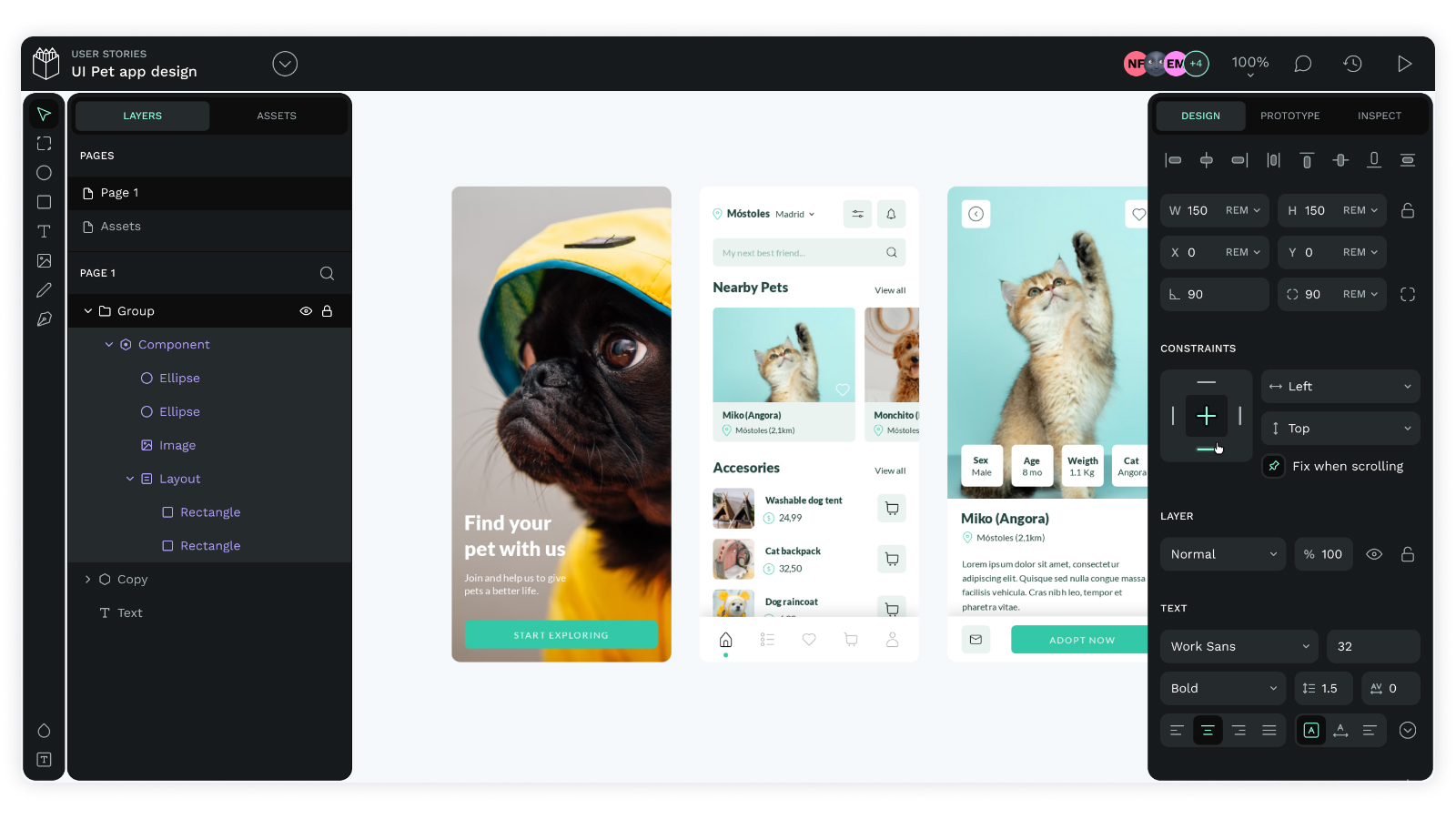
The lack of a conventional installation process (via a standard system installer) does not mean, however, that users are locked into the vendor’s primary instance. While deploying a solution using Docker or Kubernetes may sound like uncharted waters to many, in the age of ubiquitous artificial intelligence it has become far less daunting. For those willing to try, little stands in the way.
Of course, setting up your own instance is not required to test or begin using the tool. Penpot offers fully free access to its online version, where getting started is as simple as logging in. It is also worth emphasizing that the days of open-source software with interfaces resembling agricultural machinery—and posing a threat to users’ mental health—are long gone, with the traditional exception of GIMP.
In any case, Penpot is a thoroughly modern tool, offering real-time collaboration, advanced project management, component creation and asset libraries, as well as versioning, prototyping, and effortless online sharing. It may not yet be a one-to-one replacement for Figma in every respect, but for many users this lack of feature “overload” will actually be an advantage. Unfortunately, tools that become market standards—or, more often, market mandates—tend to bloat over time, while Penpot remains a lightweight and thoughtfully designed alternative.
Yes, AI Again
The speed at which solutions based on generative language models are entering ever new domains can be surprising to many. At the same time, it is hard to ignore that for a large part of society this is a quiet revolution—one they have simply not noticed yet. Regardless of one’s personal perspective, automation has firmly entered the world of UI/UX design as well.
Early experiments and research in this area began several years ago, but today it is becoming increasingly clear that artificial intelligence will not only become an indispensable part of a designer’s workflow—it will outright replace many of them.
There has been, and still is, no shortage of solutions attempting to make their mark in this space. However, much like with image or video generation tools, the vast majority amount to little more than derivative copies of existing implementations. It is worth noting that Figma itself introduced a set of AI-powered features some time ago, although its developers currently seem keen to avoid stirring up too many strong emotions.
In official communications, they cautiously emphasize that AI is meant only to automate the most repetitive and tedious tasks. Business is business, after all—and users prefer to believe that each of them is absolutely irreplaceable and produces truly unique work.
Stitch
To truly understand where we stand today, the best approach is to experience AI capabilities firsthand. One tool worth examining is Google’s free solution, Stitch. Although still in beta, it offers a fairly accurate glimpse of what the industry will soon be grappling with. A single prompt—even a clumsy one—is enough to generate a complete interface along with a working prototype, allowing the UI to be tested in a natural way. Of course, this is not yet a tool that will dethrone Figma or eliminate the need for experienced designers, as it lacks advanced libraries, components, or a fully developed design system. But…
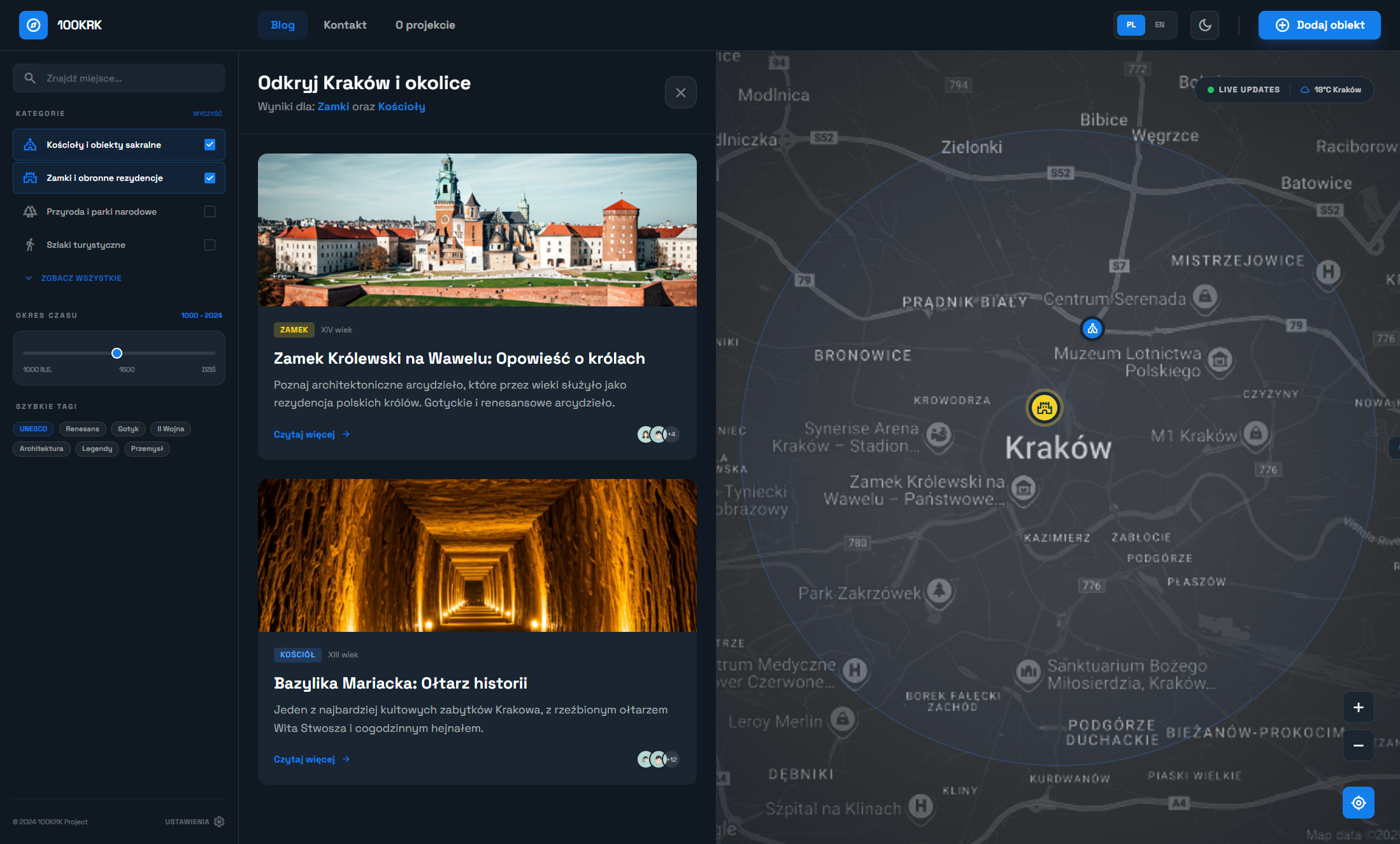
Who, having dealt with various design systems and enterprises that supposedly rely on such “tools,” can honestly claim that they are indispensable? How often do design system assumptions buckle under time pressure, client-specific demands, or a simple lack of understanding of the ideas behind them? How long does it really take to build a complete system—and does such a system even truly exist? And if it does, are end users actually able to notice and benefit from it? In a world where trends change in the blink of an eye, AI may prove faster and more effective than even the most comprehensive—but rigid—documentation.
In My Opinion, It’s Not Simply a Matter of “Good” or “Bad”
On one hand, AI encroaching on yet another creative domain feels undeniably bleak. On the other, it is hard to count the number of outright poor projects whose interfaces are capable of draining one’s will to live. AI-driven UI generation—grounded in accumulated knowledge and best practices in user experience—not only addresses this problem but, more importantly, allows developers (or, perhaps more accurately today, creators) to rapidly translate their vision into a tangible, functional solution.
All without the painstaking process of assembling interdisciplinary teams, without massive financial overhead, and without the risks inherent in unpredictable human behavior. Of course, this once again paints a picture devoid of so-called higher emotions and the mythical “human element”—but perhaps, in this particular case, zero is actually the better outcome.