

CEPiK for lunch
The automotive sector operates under its own specific rules, though at times it feels more like a “wild west.” It seems the industry is caught in a dilemma: on one hand, struggling with realities reminiscent of the 1990s, and on the other, tentatively trying to meet 21st-century standards. This applies not only to marketing but, above all, to the technologies that support business operations.
Working daily with industries that long ago embraced digitalization, encountering the “analog” side of automotive can be jarring. Even accurately counting sales volume is a challenge. Aggregate reports often deviate from reality, and accessing clean, unprocessed data is nearly impossible.
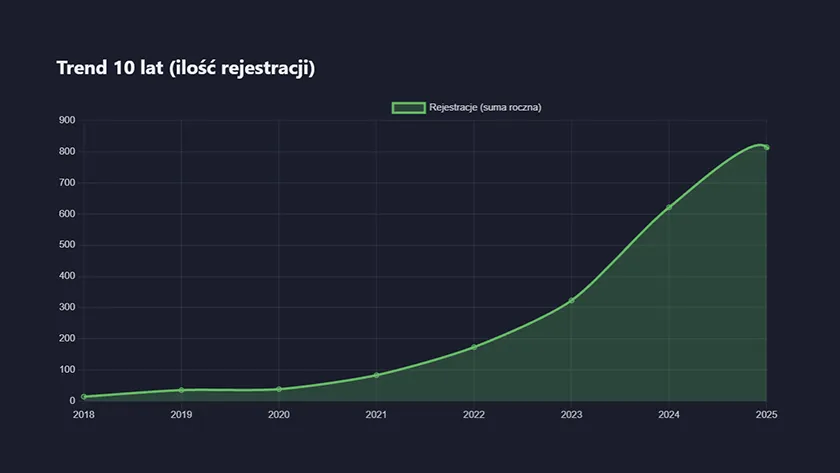
Frustration with a morning read of the 2025 PZPM report led me to a simple conclusion: rather than wrestle with ready-made solutions, it was better to build my own application. With the CEPiK API, a fairly solid Swagger documentation, and less than two hours of work, I created a tool that pulls data for any brand, model, production year, or the region where the vehicle was registered. Viva the 21st century!
To avoid overloading the infrastructure, the data is stored in JSON files and served statically — at least until a manual or forced update occurs. Just a few years ago, such a project would have taken a week. Today, the speed of development is so high that it’s worth considering releasing a full version online.
Finding users wouldn’t be a challenge — in this case, marketing is practically unnecessary, and the development process itself is surprisingly light and enjoyable. Who knows, I might just take the plunge.
However, with experience (and almost 40 years under my belt), I know one thing: this would no longer be a pro bono project. As a matter of principle — far too many such initiatives end as quickly as they begin.
Returning to the core topic: the data confirms that Royal Enfield is performing in line with expectations in Poland. Increases in registrations go hand in hand with higher brand recognition, website traffic, and social media reach. The question is whether this trend can be sustained without revising the working model or increasing the budget. I honestly doubt it. As someone suspended between the worlds of technology and the humanities, I apply a systems approach — factoring everything into the statistics, including human “content fatigue.”
Perhaps it’s time to change colors or explore a completely new direction. Such reflections are best saved for the start of the season, when the wind under the helmet effectively blows away the excess thoughts.